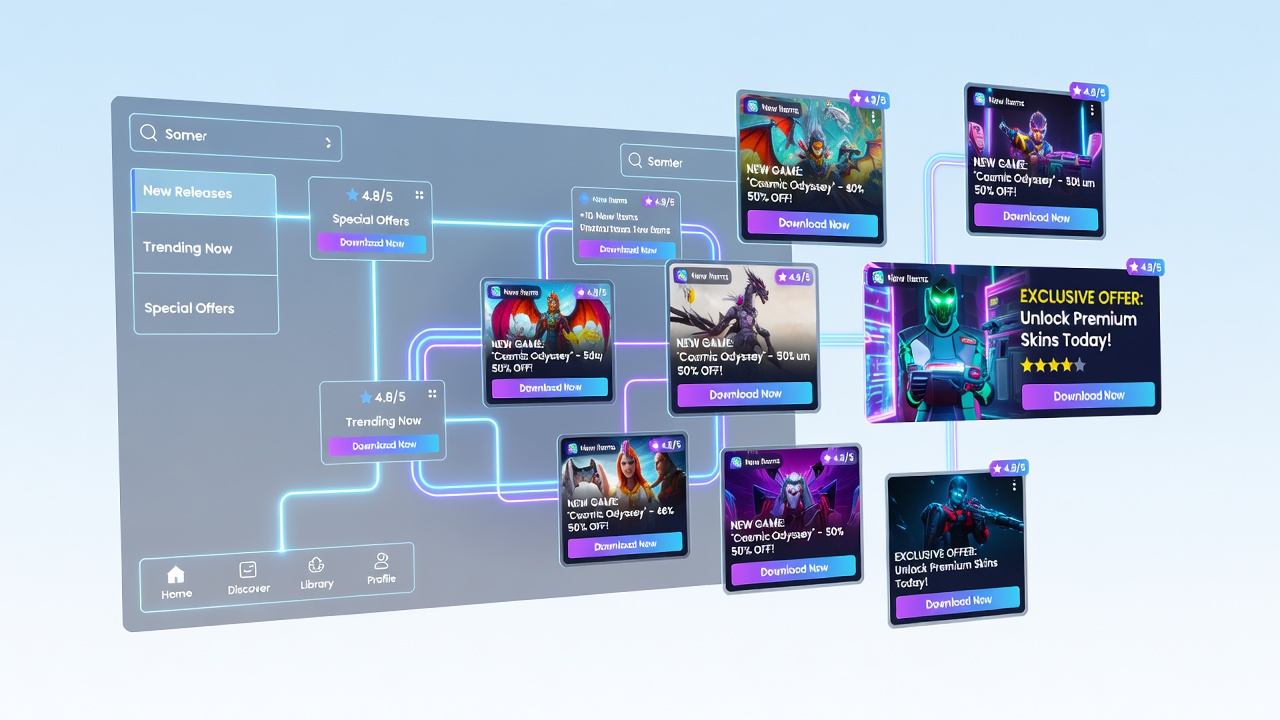
Navigation Designs in Mobile Gaming Apps Drive Discovery of New Content and Bonuses
Leading mobile platforms for casino-style entertainment rely on structured navigation systems that guide users through extensive libraries of games and promotional content, and these patterns have evolved steadily through 2026. Bottom navigation bars remain a dominant choice across major apps because they provide persistent access to home feeds, game categories, search functions, and account areas without requiring users to scroll back repeatedly. Data from industry analyses shows that apps employing this layout record higher session durations when users encounter new titles through swipeable carousels positioned directly above the navigation elements.
Tab-Based and Drawer Menu Approaches
Tab-based interfaces appear frequently in apps from established operators where separate sections for slots, table games, live dealer options, and promotions sit alongside one another, and this structure allows direct jumps between content types. Researchers tracking user behavior note that drawer menus, which expand from side taps or hamburger icons, tend to surface deeper promotional offers after users complete initial game selections. In October 2026 several platforms introduced collapsible drawer elements that surface time-limited bonuses immediately upon menu activation, resulting in measurable increases in click-through rates according to aggregated platform metrics.
Search bars integrated into top headers continue to serve as primary discovery tools when combined with predictive text suggestions that highlight trending games or active offers, and these elements reduce the number of taps needed to locate specific content. Observers note that predictive suggestions often draw from user history and current promotions, which creates pathways that blend familiar titles with new releases in a single view.
Impact on Game and Offer Visibility
Navigation patterns directly influence how quickly users locate new games because scrollable grids and infinite feeds prioritize high-engagement titles at the top of results. Studies conducted by academic groups at institutions such as the University of Nevada, Las Vegas indicate that users who navigate via category tabs discover an average of 30 percent more new releases per session compared with those limited to linear home feeds. Promotional offers placed within dedicated sections or highlighted via notification badges attached to navigation icons generate higher redemption rates when the badges remain visible across multiple screens.
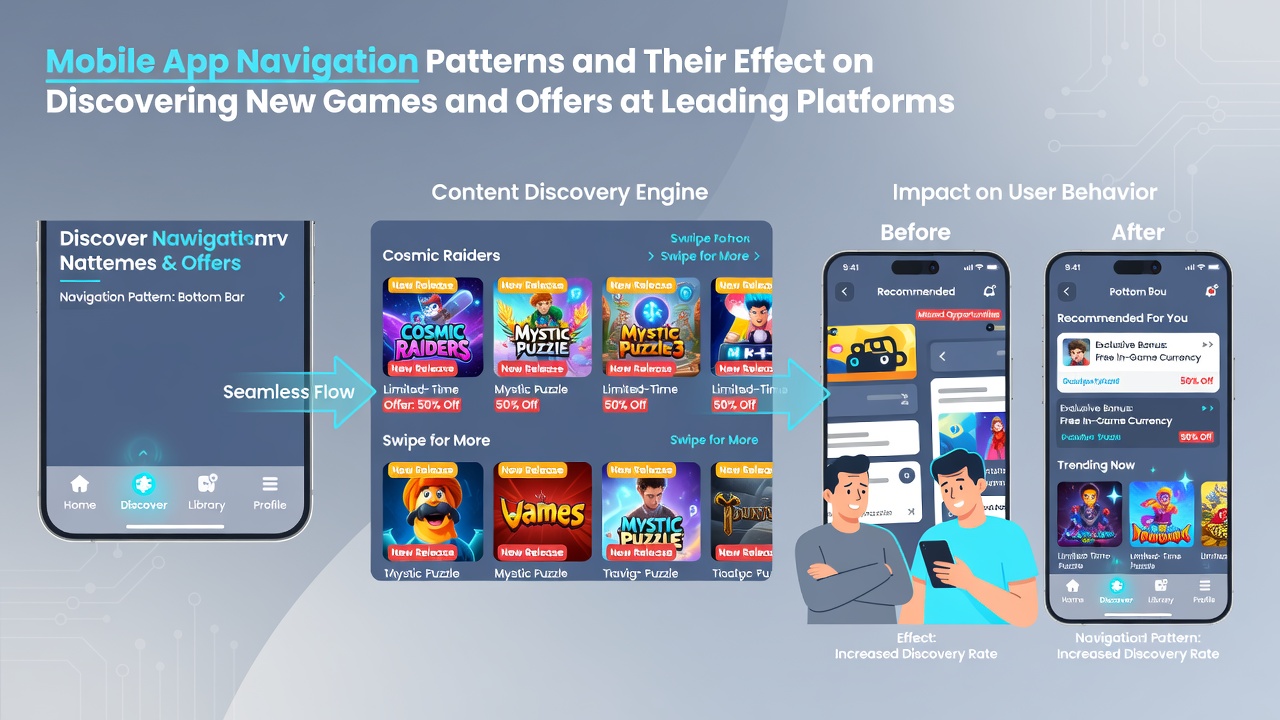
Platforms that embed offer discovery within game preview screens allow users to view bonus details without leaving the current navigation flow, and this integration reduces friction between game exploration and promotional engagement. Figures released by the American Gaming Association reveal that mobile sessions featuring in-context offer prompts convert at rates 18 percent above those relying solely on separate promotions tabs. Swipe gestures that reveal hidden offer panels behind game thumbnails have appeared in several leading apps during 2026, and early adoption data suggests these gestures increase interaction with time-sensitive deals.
Regional Variations and Platform Examples
European operators frequently combine bottom navigation with horizontal scroll sections that feature localized promotions, whereas North American apps often emphasize large hero banners that rotate through featured games and welcome bonuses. The European Gaming and Betting Association reports that navigation consistency across iOS and Android versions correlates with improved retention metrics in markets where regulatory requirements differ by jurisdiction. Users who switch between multiple platforms encounter similar bottom-bar layouts that support muscle memory and accelerate discovery of new content regardless of the specific operator.
Push notifications linked to navigation updates further extend discovery opportunities by directing users straight to newly added game categories or active offers upon app launch. In October 2026 several platforms refined notification timing to align with peak user activity periods, which produced measurable lifts in navigation-driven engagement according to internal platform dashboards shared with industry analysts.
Conclusion
Navigation patterns in mobile gaming apps continue to shape pathways toward new games and promotional content through persistent menus, predictive search, and integrated offer displays. Data collected across multiple regions demonstrates that layouts minimizing navigation steps while maintaining clear category separation produce stronger discovery outcomes for both games and offers. As platforms refine these systems in response to usage statistics, the connection between interface design and content visibility remains a central factor in user interaction patterns.